
What Injectors Don’t Learn in Certification Courses
- 11 hours ago
- 7 min read
Updated: 3 hours ago
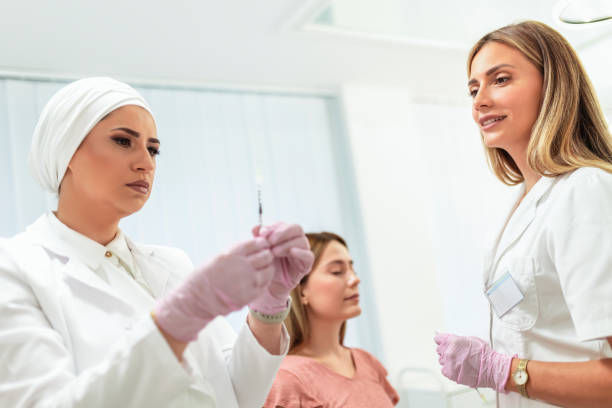
What Do New Injectors Miss in Basic Certification Courses?
Most new injectors learn basic injection patterns in certification courses, but they often miss deeper anatomy, complication management, consultation skills, patient trust-building, business planning, and real hands-on mentorship. Advanced aesthetic injector training in Phoenix helps bridge the gap between being certified and practicing with confidence.
Aesthetic medicine is growing fast, and honestly, it makes sense. Patients want natural results. They want subtle refinement. They want treatments that help them look rested, healthy, and still like themselves.
That demand has created a huge opportunity for nurses, nurse practitioners, physician assistants, and other licensed medical professionals who want to become aesthetic injectors.
But here’s the part people don’t always say out loud:
Getting certified is not the same as being ready.
A weekend course may give you a certificate. It may introduce you to Botox, fillers, facial anatomy, and safety basics. But it usually does not give you the real-world confidence needed to treat different faces, manage complications, guide nervous patients, or build a sustainable career.
That’s where deeper aesthetic injector training in Phoenix becomes essential.
The Problem With Basic Injector Certification Courses
Basic certification courses have their place. They introduce important concepts and help licensed providers take the first step into medical aesthetics.
But many new injectors quickly realize there is a gap between “I completed the course” and “I feel ready to inject real patients.”
That gap can feel intimidating.
You may know where the diagram says to inject, but what happens when the patient’s anatomy is asymmetrical? What if their muscle strength is stronger on one side? What if they want lips that are not realistic for their facial proportions?
Those are the moments where true training matters.
Human Anatomy Is Not Flat
A flat map can show you where cities are. It cannot fully show mountains, valleys, distance, or depth.
Faces work the same way.
A 2D diagram can teach general anatomy, but it cannot fully prepare you for the true depth, movement, and variation of a real human face.
Every patient is different. Skin thickness varies. Fat distribution varies. Muscle strength varies. Vascular pathways matter. Even facial expressions change how a treatment should be planned.
For Botox training in Arizona, understanding facial “safe zones” and “danger zones” is critical. But memorizing them is not enough.
You need to learn how to see anatomy in real time.
Hands-On Anatomy Mastery Beyond 2D
True skill comes from live, in-person practice on diverse faces.
In Phoenix, injectors treat patients with a wide range of skin types, facial structures, ethnic backgrounds, and aging patterns. Arizona’s desert climate also adds another layer, since sun exposure and low humidity can contribute to thinner, drier, more delicate-looking skin.
Advanced training helps new injectors develop:
Layer-by-layer injection awareness
Real-time recognition of vascular danger zones
Safer depth and angle control
Better product placement
Confidence with facial asymmetry
Conservative techniques for natural results
This is where knowledge becomes instinct.
And that does not happen from a slideshow alone.
Complication Management Is More Than Knowing What Can Go Wrong
Every injector hopes complications never happen.
But responsible injectors train as if they could.
A basic course may mention vascular occlusion, Tyndall effect, nodules, asymmetry, ptosis, or filler migration. That is important, but it is only the beginning.
Real complication management means knowing:
How to recognize early warning signs
What steps to take immediately
When to escalate to a medical director
How to document the issue
How to communicate calmly with the patient
How to prevent the situation in the first place
It is a little like learning to drive. Smooth roads are easy. You find out what you really know when conditions change.
Comprehensive Safety Protocols Build Real Confidence
Complication management for injectors is not just about keeping hyaluronidase in the office.
A strong safety foundation includes:
Proper patient screening
Medical history review
Contraindication awareness
Conservative dosing
Sterile technique
Emergency kits
Clear escalation protocols
Follow-up systems
At Zensken University, the goal is to help providers think like clinicians, not just technicians.
That means learning how to stay steady under pressure, protect the patient, and protect your license.
The Mentorship Void
This is one of the biggest problems in aesthetic medicine.
A new injector takes a course, gets excited, and then asks the obvious question:
“Now what?”
Some end up in solo suites before they are truly ready. Others join busy med spas where no one has time to mentor them. Some never start at all because they do not feel confident enough.
That is the gap most certification programs do not solve.
New injectors need someone to watch their technique, answer real questions, help refine their eye, and guide them through the awkward early stage where confidence is still developing.
Because confidence does not come from pretending you know everything.
It comes from preparation, repetition, and support.
The Art of Consultation and Building Patient Trust
New injectors often focus so much on the needle that they forget the consultation is where the treatment really begins.
A strong consultation helps you understand:
What the patient wants
What their face actually needs
What is realistic
What should wait
What should not be done at all
And yes, sometimes the most professional thing you can say is, “I don’t think that’s the right treatment for you.”
That kind of honesty builds trust.
Advanced injector training should teach the soft skills too:
Setting realistic expectations
Explaining natural versus overdone results
Using before and after photos ethically
Educating without overwhelming
Creating long-term treatment plans
Handling hesitant or nervous patients
These skills create loyalty, referrals, and better outcomes.
The Business Side No One Talks About Enough
The transition from traditional healthcare into aesthetics is not just clinical.
It is also entrepreneurial.
Many new injectors are surprised by how much they need to understand about business, including:
Pricing
Scheduling
Supplies
Malpractice insurance
Medical director requirements
Patient follow-up
Social proof and reviews
Marketing in a competitive Phoenix market
Being talented is not enough if no one knows how to find you.
And being booked is not enough if your systems are weak.
Aesthetic medicine is both a clinical career and a relationship-driven business.
Business and Career Success in Phoenix Aesthetics

Phoenix, Scottsdale, Arcadia, and the surrounding Arizona market are filled with patients seeking natural, refined aesthetic results. That creates opportunity, but it also creates competition.
New injectors need more than a certificate.
They need to understand how to build trust in a local market.
That may include:
Creating a professional online presence
Asking for reviews
Building referral relationships
Educating patients through content
Developing a personal aesthetic philosophy
Choosing treatments that align with patient safety and natural outcomes
The best injectors do not just perform treatments. They become trusted providers.
What Makes Zensken University Different?
At Zensken, the philosophy is simple:
Clinical excellence is the only path to a sustainable career in aesthetics.
Zensken University moves beyond the basics with advanced medical aesthetics training for licensed professionals who want to build real skill, not just collect a certificate.
The training environment is immersive, focused, and intentionally elevated.
You are not rushed through a crowded room.
You are taught to slow down, think critically, respect anatomy, and develop your own clinical voice.
Training may include:
Facial anatomy and vascular safety
Botox and neuromodulator technique
Dermal filler fundamentals
Patient assessment
Consultation strategy
Complication prevention
Natural result planning
Hands-on practice
Mentorship and career guidance
This is training for providers who want to do things the right way.
Why One-on-One Mentorship Matters
In a large course, it is easy to hide.
In a one-on-one or small mentorship setting, your questions, technique, hesitation, and goals are seen.
That is a good thing.
It allows the trainer to help you refine:
Hand positioning
Injection angle
Depth control
Product choice
Patient communication
Facial assessment
Treatment planning
Those small details matter.
Sometimes they matter more than the injection itself.
Real Experiences from Zensken-Trained Injectors
“Switching from basic certification to Zensken’s one-on-one training gave me the confidence to handle more complex cases. My patients notice the difference in how natural the results look.”Recent RN Graduate, Phoenix
“The mentorship around complications and patient conversations was invaluable. I went from nervous to actually feeling prepared.”PA, Arizona
“Hands-on anatomy training in a real clinic setting changed the way I inject. It made everything click.”Zensken Trainee
These are the kinds of shifts that turn a beginner into a thoughtful provider.
The Foundation of Your Injector Career
Even minimally invasive treatments require serious skill.
Injectables may look simple from the outside, but they require:
Anatomical knowledge
Clinical judgment
Technical precision
Patient communication
Safety awareness
Artistic restraint
Certification courses can introduce the concepts.
But confidence comes from deeper training, hands-on repetition, and mentorship.
That is how you develop your clinical voice.
That is how you build patient loyalty.
And that is how you move from “I’m certified” to “I’m ready.”
Ready to Move Beyond the Basics?
If you are a licensed medical professional looking for aesthetic injector training in Phoenix, Zensken University was built for you.
Whether you are a registered nurse, nurse practitioner, physician assistant, or medical provider ready to grow into aesthetics, the next step is not just more information.
It is better guidance.
Explore Zensken University training programs and schedule a one-on-one session to begin building skill, confidence, and a career rooted in safety, artistry, and refined results.
FAQ
Do I need an Arizona-specific license to train if I’m visiting from out of state?
You need a valid, unencumbered professional license such as RN, NP, PA, MD, or DO. Some compact nursing licenses may be recognized in Arizona, depending on your situation. Zensken can help guide you on what to confirm before training.
How do I handle my first complication if I’m working solo?
Preparation is your best defense. You should have a complication kit, clear protocols, access to a medical director or mentor, and a strong understanding of when to escalate. Advanced training helps you respond calmly instead of guessing under pressure.
Can I specialize in lip fillers right away?
It is better to master facial anatomy, foundational Botox, and core filler principles first. Lips require finesse, restraint, and a strong understanding of facial balance. Skipping the basics can lead to poor results and higher risk.
What business overhead cost do new injectors often forget?
Many new injectors underestimate the cost of medical malpractice insurance, emergency supplies, medical director support, product inventory, and ongoing education. These are essential parts of practicing safely and professionally.
What makes Zensken University different from basic injector certification courses?
Zensken University offers a more personalized, mentorship-focused training experience with an emphasis on anatomy, safety, natural results, complication management, and real-world confidence. It is designed to prepare you to practice, not just pass a course.
How long is aesthetic injector training at Zensken?
Training length may vary based on your experience level and program goals. Some providers need foundational training, while others benefit from advanced or one-on-one mentorship. The focus is quality, not rushing through a checklist.
Does Zensken cover advanced treatments like Sculptra or Bellafill?
Depending on the training program and provider level, advanced topics may include biostimulators such as Sculptra and Bellafill, regenerative aesthetics, and longer-term treatment planning.
Does Zensken offer career support after training?
Yes. Zensken’s training philosophy includes mentorship, continued education, and practical guidance for building confidence in the Phoenix aesthetics market. The goal is to support long-term growth, not just one training day.


